
Do you remember the feeling of placing your bare feet on the earth?
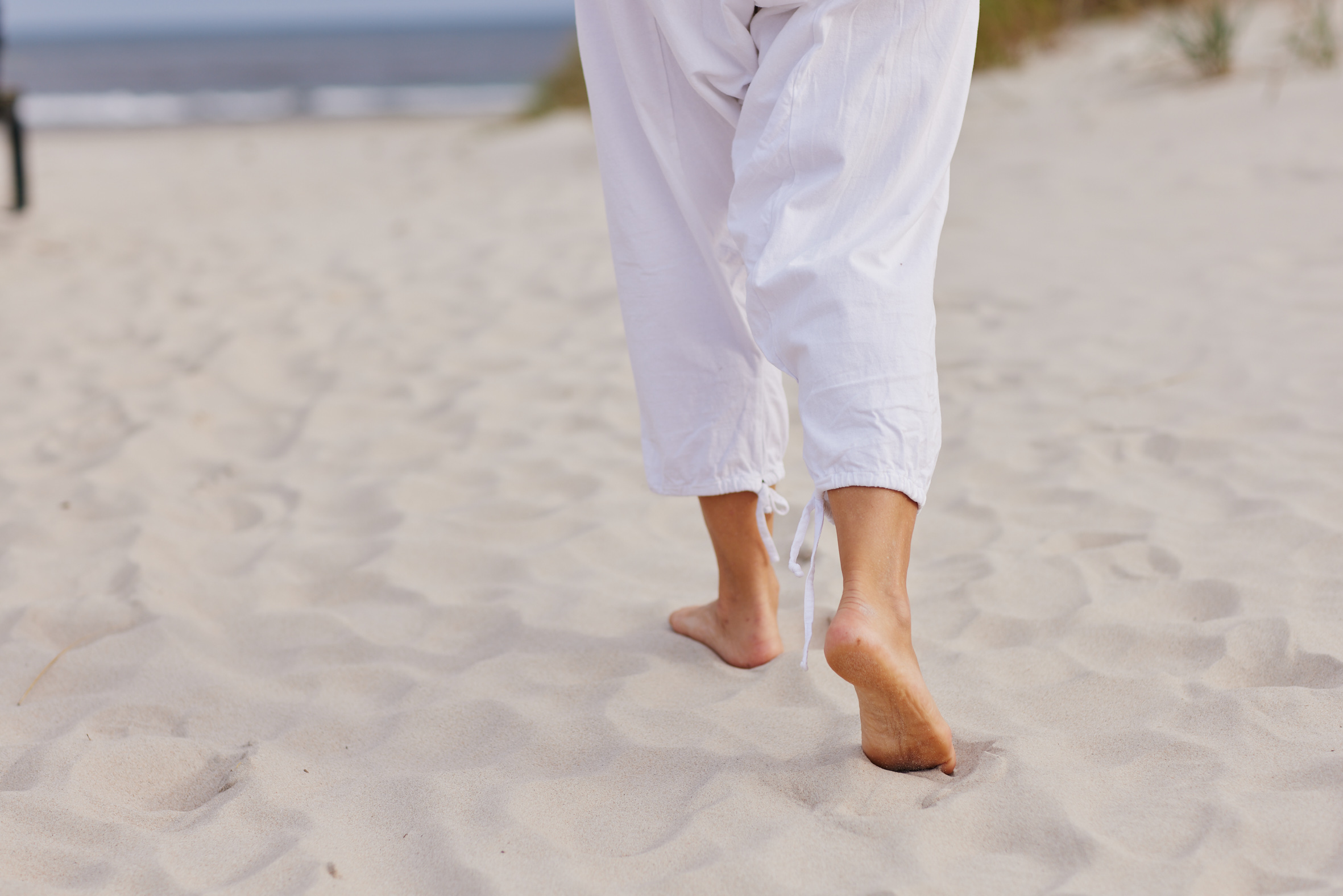
The cool grass beneath your soles. Warm sand slippingbetween your toes. The soft forest floor, uneven and alive. The occasional sharp stone that makes you instantly aware ofwhere you are.
It tickles. It can feel strange. Sometimes uncomfortable.
Your toes are free to spread and move. You might findyourself curling them into the sand, balancing on roots, or absent-mindedly picking up a flower with your feet, just as you might have done when you were a child.
For many of us, walking barefoot evokes something familiar. A sense of freedom. Of connection. Of summer days and simpler times.
It can also feel surprisingly vulnerable.
Without shoes, there is nothing between you and the world. No protection. No cushioning. Just direct contact.
And perhaps that is part of its magic.
The Body Remembers
There is more happening than we might realise when our bare feet meet the earth.
One of the first things that changes is the nervous system.
Natural environments already have a calming effect on us, butdirect contact with the earth seems to deepen that experience. Walking barefoot on grass, sand, soil, or forest ground canstimulate the parasympathetic nervous system — the part responsible for rest, digestion, recovery, and healing.
The breath often becomes slower.
The heart rate may soften.
The body receives a subtle message: you are safe.
Awakening the Senses
Our feet contain thousands of nerve endings, yet most of the time they are hidden inside shoes.
When we walk barefoot, the feet receive a rich stream ofsensory information. Every surface feels different. Grass, earth, sand, stone, moss.
This constant feedback enhances proprioception — our awareness of where the body is in space.
Balance improves.
Movement becomes more conscious.
We become more present because the body is paying attention.
In a world that constantly pulls our awareness outward, the simple act of feeling the ground beneath our feet can bring usback to ourselves.
Letting the feet do what they were designed to do
Modern shoes often restrict the natural movement of the foot.
Barefoot walking allows the toes to spread naturally, activatesthe arches, and encourages the many small muscles of the feetand lower legs to participate in movement.
Over time, and approached gradually, this can help strengthenthe feet and support more natural movement patternsthroughout the body.
Our feet are remarkable structures.
Sometimes they simply need the opportunity to remembertheir own intelligence.
Perhaps the most profound effects are not in the body, but in the mind.
Walking barefoot naturally slows us down.
We pay attention.
Where am I placing my foot?
How does the ground feel?
What is happening right now?
Without trying, we enter a form of mindfulness.
There is also something deeply nourishing about feeling part of the natural world rather than separate from it.
For a few moments, we are not observing nature.
We are participating in it.
The earth supports us directly.
The wind touches our skin.
The body remembers that it belongs here.
Or perhaps something ancient awakens — a quiet sense ofconnection that has been there all along, waiting beneath the soles of your feet.
0 Comments